This is Vegas account access, verification and support
 Available in GB

This is Vegas combines an account-number-and-password sign-in with payment-card ownership checks, a support desk and browser access on mobile devices. Those features sit at different stages of the account relationship. A login establishes access to an account; a document request concerns the person or payment method connected to it; and a support conversation is a way of resolving a specific question. Keeping those stages separate makes account records easier to understand, especially when a payment is pending.
The casino describes both real-money and free-play account flows. Its account guidance also covers forgotten credentials and customer contact. On a phone, the site runs through a browser, so account access and game navigation share the same small-screen environment. For practical purposes, the strongest starting point is the distinction between credentials, identity evidence and the record of a payment.

Table of Contents
- Account numbers and passwords anchor the sign-in process
- Identity and payment records can become part of a withdrawal review
- Marketing preferences run through the support route
- Mobile access runs through a browser
- Live chat is the main round-the-clock contact path
- Questions about accounts and mobile access
- Account continuity depends on credentials and matching payment details
Account numbers and passwords anchor the sign-in process
The This is Vegas FAQ describes sign-in using an account number and a password. That pairing is different from a service that identifies an account solely by an email address. An account number serves as a reference to the account, while the password is the secret used to authenticate access. Mixing them up in a support message or treating the account number as a password can slow a straightforward conversation about a forgotten credential.
The casino’s help material directs forgotten-password questions through email support. The practical distinction is that password recovery is an account-access issue, while payment verification concerns the account holder and the funding method. A password can be reset without resolving a separate question about whose card was used. Equally, supplying a card record does not replace an account credential.
An account may also be associated with play-for-fun activity. That is useful context because a free-play session and a real-money transaction have different consequences. A game may look similar on screen, but a balance, deposit record and withdrawal request only become relevant when funds or financial records are involved. The description of a demo mode should never be mistaken for evidence that money has moved.
When keeping personal records, it helps to separate the account identifier from secrets. An account number may be useful in a support ticket; a password is not. Reusing the same password in correspondence, putting it in screenshots or forwarding it alongside payment records creates unnecessary exposure. A support message can identify the question and the account reference without including the password itself.
Identity and payment records can become part of a withdrawal review
This is Vegas says it may request proof of identity, copies of a payment card and transaction records. The word “may” matters here because the request is conditional in the casino’s own explanation. It is not a promise that every account follows the same document sequence, nor a basis for assigning a fixed number of hours or days to a review. What can be stated plainly is the type of evidence the casino says it may ask for.
The FAQ also says a registered card must belong to the account holder: third-party cards are not accepted under that rule. Card ownership and identity are related, but they answer different questions. Identity evidence links a person to an account. A card record links a particular payment instrument to its named holder. Transaction records may then connect that instrument to a specific movement of money. Each record has a different role in understanding a cashout or deposit history.
A useful way to organise the concepts is to follow the sequence of events:
- Account reference. The account number identifies the record to which a question relates, without revealing the password.
- Identity evidence. An identity document concerns the person associated with the account, as distinct from the device being used.
- Payment ownership. A registered card is associated with its holder, which matters when a name on the account and a name on a funding instrument are compared.
- Transaction trail. Payment dates, reference numbers and amounts can help distinguish a deposit from a pending withdrawal or a reversed request.
This separation becomes especially useful if a withdrawal is delayed. A support discussion about whether a payment was processed, whether additional records were requested and whether the account holder’s name matches a card should not be collapsed into the vague phrase “the account is blocked”. Specific questions allow specific answers and preserve the distinction between an account-access issue and a payment-processing issue.
The brand’s general cashier guidance describes Bitcoin and bank-wire withdrawal routes, and independent UK-oriented descriptions include a Bitcoin route. Those descriptions should not be treated as instructions to transfer funds or proof of service availability. The broader deposit and withdrawal routes discussion sets out the different roles of cashout processing, funding history and cryptocurrency transfers.
Payment evidence is sensitive. A reader should distinguish a general support enquiry from the secure method a provider specifies for submitting financial documents. Passwords, card security codes and unrelated personal records are unnecessary for describing what a payment issue is about. The relevant principle is data minimisation: enough information to identify the transaction, without disclosing material unrelated to the question.
Marketing preferences run through the support route
The This is Vegas privacy material offers an email-support route for opting out of marketing communications, using [email protected]. That is a preference-management mechanism described by the casino. It concerns future promotional messages, which are different from account correspondence about security, payment records or a specific customer-service enquiry.
It is worth keeping those categories distinct. A marketing message may be about an offer or a promotional update; a transactional message may address an existing account event. Asking to stop promotional correspondence is therefore a separate task from asking about a payment reference or forgotten credentials. Clear wording helps avoid a support exchange in which the original question is lost among unrelated subjects.
Marketing communications can arrive through several channels in general online services, but the casino’s privacy page specifically provides its support contact as the route for an opt-out request. The practical record is simple: retain a copy of the message and the response, and note the date. That offers a timeline of the preference request without assuming anything about background data handling that a message alone cannot demonstrate.
Financial-document questions carry more sensitive material than a marketing preference. A request about mailing choices normally needs an address or account reference so the right communication preference can be identified. A question about a particular transaction may call for a payment reference. Sending the entire history of an account to solve a routine mailing preference is unnecessary.
Mobile access runs through a browser
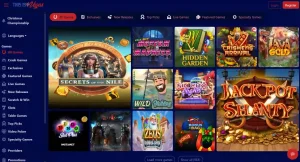
This is Vegas can be accessed through mobile browsers on iOS and Android. That gives the casino a browser-based mobile experience, with account access and the games catalogue appearing within the same kind of web session used on a computer. The practical differences come from screen size, touch input and the way a mobile browser handles tabs and navigation.
On a phone, fewer controls fit on the screen at once. A menu might sit behind a navigation icon, while account details, a cashier view and a game each demand attention in a smaller area. The user experience therefore depends on recognising which section is open and how to return to account information without confusing a game view with a payment view.
The variety of games at This is Vegas adds a second mobile consideration. Slots, live games and table games arrange their controls differently. On a compact display, reading an entire paytable, looking at a stake field and following a live table’s sequence may require different navigation steps. The live-game and slot lobby coverage separates the underlying game families and their pacing.
There is also a useful difference between a site’s mobile web view and its actual game software. The browser hosts a page, but individual games can use different interface layouts supplied by different studios. A comfortable lobby menu does not automatically mean that every rules panel or game-control area will be equally comfortable on a small display. Important information should remain legible before any financial decision.
When discussing a mobile problem with support, the device type, browser and a brief description of the screen where the problem occurred can identify the context. The point is to make the issue reproducible as a description, not to disclose a password or paste sensitive financial fields into a screenshot. A browser issue and an account-review question need different kinds of evidence.
Live chat is the main round-the-clock contact path
This is Vegas offers live chat around the clock, a service description carried by the casino and an independent casino profile. The FAQ also names telephone and email support. Those routes serve different styles of question: a live conversation can clarify what someone needs to know now, while a written thread is useful for preserving dates, amounts and exact wording about a transaction or document request.
The contact address [email protected] also appears in the brand’s privacy information. Its presence as a support contact helps separate a message addressed to the casino from general comments about the brand posted elsewhere. User-review platforms can show patterns of experience, but they do not replace the original payment reference or correspondence in an individual case.
For an ongoing account question, a short chronological record is more useful than an emotional summary. It can include the first date a problem appeared, the specific part of the account involved, any transaction reference and a clear description of the reply received. The sequence is especially helpful when a case changes from a login question to a request for identity records.
A concise support summary could cover these elements:
- The account number or other ordinary reference, without a password.
- The date and type of the event, such as a forgotten credential, marketing preference or payment enquiry.
- The transaction identifier where a payment question is involved, with a description of the amount and method if relevant.
- Any earlier case reference and the exact next step described in the response.
- The date of the latest reply, so the correspondence keeps a consistent chronology.
That list is a method for keeping records, not a claim that the casino requires every item in every contact. The right details depend on the subject. An account credential issue does not need a complete card transaction trail, while a withdrawal question is difficult to discuss without knowing which transaction is meant.
The casino’s independent profile also lists several support languages, including English, Spanish, Portuguese, Japanese, German, Italian and French. The useful point is that language choice can shape the clarity of a support exchange; it does not alter the terms of a payment or remove the need for a coherent written record.
Questions about accounts and mobile access
How does This is Vegas describe account login?
The casino FAQ describes an account-number-and-password sign-in. Forgotten-password help is handled through its email support route.
What documents can This is Vegas request?
The casino says it may request proof of identity, copies of a payment card and transaction records. It also requires a registered card to belong to the account holder.
Can This is Vegas be used in a mobile browser?
Yes. Independent casino profiles describe browser access on iOS and Android, covering the site without requiring a separate app-based explanation.
How can account holders contact This is Vegas support?
Live chat is described as available around the clock. The casino also names telephone and email contact, and its privacy page gives [email protected] as a contact address.
Account continuity depends on credentials and matching payment details
This is Vegas uses account-number-and-password access, describes conditional document checks and links marketing preferences to its email-support channel. The pieces fit together as an account relationship, but they do different jobs. A password protects entry, an identity record concerns the person using the account, and a cardholder record concerns the person whose payment instrument is involved.
The browser-based mobile experience adds another way to view the account and catalogue without changing those responsibilities. Around-the-clock live chat provides a contact route; the most useful records remain account references, payment history and the chronology of replies. Matching those details to the subject of an enquiry makes the account easier to understand without treating a support conversation as proof that any transfer or review has finished.