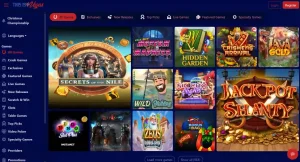
This is Vegas licensing and player protection in Great Britain
 Available in GB

This is Vegas operates at thisisvegas.com, with slots, table games, live titles and a mixture of Bitcoin and traditional payment methods. The question for a Great Britain resident is whether the casino has the local authorisation that makes consumer safeguards enforceable. A Curaçao statement on a casino website and a licence recorded in the UK public register answer different questions.

Table of Contents
- Can This is Vegas offer online casino games in Great Britain?
- How licence registers describe the operator
- Complaints and terms can change the stakes
- The Curaçao statements in the casino's own material
- What a player can do when a withdrawal is disputed
- How gambling winnings are usually treated for UK tax
- Questions about This is Vegas licensing
- For Great Britain, the licence position governs the available safeguards
Can This is Vegas offer online casino games in Great Britain?
Remote casino businesses serving consumers in Great Britain require an operating licence from the UK Gambling Commission (UKGC). Checks of the public business register did not identify an active remote casino licence or relevant trading-domain entry for thisisvegas.com, or a matching entry under the operator name attributed to the casino in independent directories. That is why This is Vegas is treated as restricted for the Great Britain market.
The absence of an identified entry is a specific register-check outcome. It does not mean the commission has made a formal decision to refuse, suspend or revoke a licence. Nor does it justify treating an offshore licence statement, an English-language website or a page that loads in a browser as equivalent to UKGC authorisation. The statutory question concerns the business supplying remote casino games to British consumers and its licensed trading domains.
UKGC regulation covers England, Scotland and Wales for this purpose; Northern Ireland has a different legal framework. This distinction matters because a claim about being “UK licensed” should not be accepted as a vague geographical label. The named operator, activity, licence type and domain are the useful identifiers.
For a British customer, the practical consequence is more than an administrative label. UK-licensed casinos have specific obligations concerning fair treatment, complaint handling and safer gambling. Without an identified licence for this operator, those UK-specific arrangements cannot be presumed to apply. A site’s technical accessibility cannot supply that protection.
How licence registers describe the operator
The official casino domain is thisisvegas.com. Independent casino databases associate it with SSC Entertainment N.V., but the examined first-party FAQ, privacy and security material does not provide the corresponding full operator identification from a current terms document. That means the attributed corporate name is useful for a register search, rather than proof of a present-day licence relationship.
There are two different public-register exercises. In Great Britain, the UKGC business register is the relevant record for remote casino activity supplied to local consumers. In Curaçao, the Curaçao Gaming Authority (CGA) now maintains public information on licensed operators. A result in one jurisdiction does not create permission in the other.
| Claim or question | Relevant public record | What it means |
|---|---|---|
| UK remote casino permission for thisisvegas.com | UKGC licensed-business register and trading-domain checks | No active matching entry was identified; this is not a formal licence-refusal decision. |
| The casino describes Curaçao licensing | Casino FAQ and security information | A first-party jurisdiction statement, not independent confirmation of active licence coverage. |
| SSC Entertainment N.V. is attributed as operator | Independent casino directories and name searches | A third-party company association that still needs a demonstrable link to a currently authorised trading domain. |
| A name appears in the CGA operator register | CGA public operator-name listing | Its scope is licensee names; it is not a complete public list of every casino domain. |
The CGA operator-name listing returned no text match for “SSC Entertainment”, “Antillephone” or “This Is Vegas”. A company-name listing cannot by itself settle every possible trading-domain, group-company or intermediary arrangement. The decisive link would connect the casino’s real operator and official domain to a live, applicable authorisation.
Matching the domain is important because lookalike websites may reuse a familiar casino name or republish promotional details. The material considered here concerns only thisisvegas.com, not similarly named UK-themed domains or historical sister brands. Ownership associations alone also do not transfer licence coverage, terms or consumer guarantees from one casino to another.
The practical reading order for any licensing evidence is therefore legal entity, licence category, status and trading domain. Each element answers a different question: who is responsible, what activity is covered, whether the permission is current and which online service falls under it.
Complaints and terms can change the stakes
Casino Guru’s review assigns This is Vegas a 3.0/10 Safety Index, described by that platform as very low. The complaint figures provided by that service list 41 cases: 0 opened, 1 unresolved, 10 resolved and 30 rejected. These are the platform’s case-processing categories, not 41 judicial findings or 41 proven breaches by the casino.
The same reviewer identifies several potentially unfavourable terms, including possible winnings limits linked to deposits, treatment of dormant account balances and restrictions on certain playing strategies. A reviewer’s classification is valuable as a reason to read an operative clause closely; it is not equivalent to a regulator finding that a given balance was unlawfully withheld.
The categories also tell different stories. A resolved case may involve a corrected payment, a settlement, a misunderstanding or another outcome recorded by the complaints service. A rejected complaint is not necessarily evidence of dishonesty by either party. The unresolved count identifies cases where the service did not record closure. Treating every complaint as a proven loss would exaggerate the evidence.
A deposit-linked maximum-winnings provision is particularly consequential because a player might assume that only bonus play carries a cash-out limit. An inactivity clause is consequential for balances left untouched over time. Restrictions on betting strategies can matter when the casino argues that a particular pattern breaks its terms. Such clauses deserve separate reading, with the applicable transaction history and the version of the terms used for that session.
User reviews elsewhere include positive comments about games or service and negative accounts concerning withdrawal timing or document requests. These are personal experiences. They can help identify questions a customer might ask, but they cannot prove that the same event will occur for everyone, or determine the legality of an operator’s conduct.
The critical question during a dispute is not simply how many people have complained. It is which condition the operator relied upon, when the condition applied, how it was communicated and whether the corresponding transaction and correspondence can be reconstructed.
The Curaçao statements in the casino’s own material
The casino’s FAQ describes itself as licensed under the Government of Curaçao. Its separate Security information also uses wording about regulation by the Kingdom of the Netherlands and a Curaçao eGaming authority. Those descriptions should not be collapsed into a single contemporary business-to-consumer licence number: the historical language, administrative authority and legal form are distinct.
The Curaçao Gaming Authority is the relevant contemporary regulator under the country’s reformed framework. Historical references to Antillephone arrangements and legacy sublicensing do not demonstrate that the domain has an active licence under today’s regime. The operator-name register searches described above do not, conversely, constitute a finding that every conceivable company-domain relationship is impossible.
What matters for a customer is the scope of the right claimed. An operator may advertise a jurisdiction, while the public register identifies a different corporate entity. There may be a historical licence, a technology supplier credential or an assertion about a group business. None should be substituted for a current operator authorisation that actually includes thisisvegas.com and the games offered.
Nor does Curaçao licensing substitute for a British remote casino licence. The two frameworks have different responsible authorities and consumer mechanisms. Even a valid foreign authorisation would not automatically satisfy the UK requirement for supplying the Great Britain market.
Responsible scrutiny therefore separates three propositions: the brand makes a Curaçao statement; a public regulator record identifies its named licensees; and an applicable authorisation covers this specific casino domain. The first proposition exists in the brand’s material. The latter two cannot simply be inferred from it.
What a player can do when a withdrawal is disputed
A disputed withdrawal can involve an account-name mismatch, identity documents, payment-provider handling, a pending request or a term restricting the amount payable. Those scenarios have different remedies. Preserving a clear chronology makes it easier to distinguish what the operator accepted, what it requested and what remains outstanding.
- Keep the account trail. Save the account identifier, balance snapshots, withdrawal request details and the exact reference associated with each transaction. Retain the version of the terms that applied when the request was made.
- Separate transaction stages. Record when the request was submitted, whether the casino marked it pending or approved, and whether a bank or blockchain transfer actually occurred. A casino-side approval is not the same event as recipient settlement.
- Save communication. Retain complete support emails, chat transcripts, document requests and replies, including dates and attachments. Avoid sending identity documents over a channel that cannot be tied to the genuine service.
- Request a specific explanation. Ask which contractual condition or verification item is responsible for a delay or adjustment, and which transaction the condition concerns. Vague replies make it harder to resolve a precise dispute.
- Choose the right escalation route. An approved alternative dispute resolution scheme and UKGC licensee complaint rules belong to UK-licensed operators. They cannot be assumed to cover an entity without an identified UKGC licence.
For practical detail about how funding and withdrawal steps relate, see the guide to payment and withdrawal mechanics. It distinguishes the casino’s stated cash-out procedures from bank and blockchain processing, which can help build a meaningful timeline.
Identity requests may also be relevant. The casino’s FAQ describes requests for identification, card copies and transaction records, with a rule that a payment card belongs to the registered player. The guide to account verification and support explains those account-side issues without treating every document check as misconduct.
People affected by financial harm can speak confidentially to GamCare at gamcare.org.uk or the National Gambling Helpline on 0808 8020 133. GAMSTOP is the national self-exclusion system connected with participating UK-licensed operators; participation by This is Vegas must not be assumed. Independent support and an operator’s dispute procedure are separate services.
How gambling winnings are usually treated for UK tax
In Great Britain, ordinary personal gambling winnings are generally outside income tax, and gains from gambling are normally exempt from capital gains tax. HMRC’s guidance distinguishes such personal gambling receipts from situations where gambling activity is associated with a business or another taxable arrangement.
That general treatment is not a statement about the casino’s licensing position, an endorsement of its services or a promise about every player’s circumstances. Residency, business arrangements and other facts can affect the analysis. The appropriate source for a particular case is HMRC or a qualified tax adviser who can consider the individual’s situation.
Payment method does not, by itself, settle how a separate asset movement might be treated. Bitcoin can change value between receiving, holding and disposing of it. Those events should not be automatically conflated with the treatment of an ordinary gambling win. Specific digital-asset transactions may require their own tax analysis, especially where disposals or business activity occur.
The sensible separation is between the tax character of a gambling win, the legal status of the casino supplying a game and the accounting treatment of any later asset transactions. One conclusion should not be used as proof of another.
Questions about This is Vegas licensing
Does This is Vegas have a UK Gambling Commission licence?
No active UKGC remote casino entry for thisisvegas.com was identified in the register checks. A website being accessible does not establish permission to supply casino games in Great Britain.
Does the casino claim a Curaçao licence?
Yes. The casino’s FAQ refers to Curaçao, but that claim is separate from evidence that a current business-to-consumer licence covers thisisvegas.com.
Can UKGC complaints procedures resolve a dispute with this casino?
UKGC licensee complaint requirements and approved alternative dispute resolution apply to licensed operators. No UKGC licence connection was identified for this brand, so those safeguards cannot be assumed here.
Are personal casino winnings taxed in Great Britain?
Ordinary personal gambling winnings are generally not subject to UK income tax or capital gains tax. Business-related or unusual circumstances can require individual advice from HMRC or a qualified tax adviser.
For Great Britain, the licence position governs the available safeguards
This is Vegas has a recognisable multi-provider casino catalogue and identifiable Bitcoin, card and voucher payment descriptions. The limiting issue in Great Britain is the missing identified UKGC trading-domain authorisation, not whether the website has working pages or an offshore licensing statement. Foreign register searches, complaint statistics and player stories add useful context, but none replaces the specific local licence link.
For consumer protection, the clearest distinction is between safeguards that attach to a British licensee and procedures a casino describes for its own accounts. The former cannot be assumed for this domain; the latter must be read against the actual terms and a preserved transaction record.